
Ayahuasca es una palabra quechua que traduce bejuco de la muerte.
Ayahuasca o yagé es una bebida tradicional indígena usada en rituales por pueblos amazónicos y andinos de Sudamérica. Tiene dos significados principales:
- El nombre de la planta: En algunas regiones, particularmente Colombia, Ecuador y zonas cercanas de Brasil y Perú, “yagé” se refiere específicamente a la planta Banisteriopsis caapi, uno de los ingredientes principales de la bebida.
- La bebida ceremonial: Tanto “ayahuasca” como “yagé” también se usan para referirse a la infusión preparada a partir de varias plantas, siendo la Banisteriopsis caapi una de ellas. Ayahuasca proviene del quechua y significa “soga de los espíritus”, mientras que yagé es un término cofán.
La bebida se usa en ceremonias espirituales y de sanación, y tiene efectos psicoactivos debido a la presencia de DMT (dimetiltriptamina) y otros alcaloides.
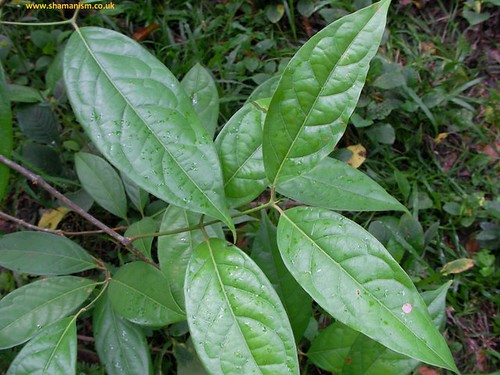
Ayahuasca (pronounced eye-ah-wah-ska), in Quechua language “dead man’s liana”, is a plant-based psychedelic drug. It’s typically brewed into a tea or a concentrated liquid for consumption. The brew contains chemicals that can affect your senses and induce altered states of consciousness, often referred to as getting “high”.
Traditionally, Ayahuasca has been used by Indigenous cultures and folk healers in the Amazon and Orinoco basins for spiritual ceremonies, divination, and healing various psychosomatic complaints
This healing and divination tool is a decoction of Banisteriopsis caapi and Psychotria viridis plants, sometimes with the addition of a little durman.
The main ingredients of Ayahuasca are the leaves of the Psychotria viridis shrub and the stalks of the Banisteriopsis caapi vine. These plants contain hallucinogenic properties. Specifically, Psychotria viridis contains N,N-dimethyltryptamine (DMT), a powerful psychedelic substance that occurs naturally in the plant. However, DMT has low bioavailability because it gets rapidly broken down by enzymes in the liver and gastrointestinal tract. To allow DMT to take effect, it must be combined with something containing MAO inhibitors (MAOIs). Banisteriopsis caapi, on the other hand, contains potent MAOIs called β-carbolines, which also have psychoactive effects. When these two plants are combined, they form a potent psychedelic brew that affects the central nervous system, leading to altered states of consciousness, including hallucinations, out-of-body experiences, and euphoria.
Czech Language Lessons & Translations
- Tweet
- Click to share on WhatsApp (Opens in new window) WhatsApp
- Share on Tumblr
- Click to share on Bluesky (Opens in new window) Bluesky
- Click to share on Reddit (Opens in new window) Reddit
- Click to share on Threads (Opens in new window) Threads
- Click to share on Telegram (Opens in new window) Telegram
- Click to share on Nextdoor (Opens in new window) Nextdoor

- Click to email a link to a friend (Opens in new window) Email
- Click to share on Mastodon (Opens in new window) Mastodon

 Czech Language Lessons & Translations