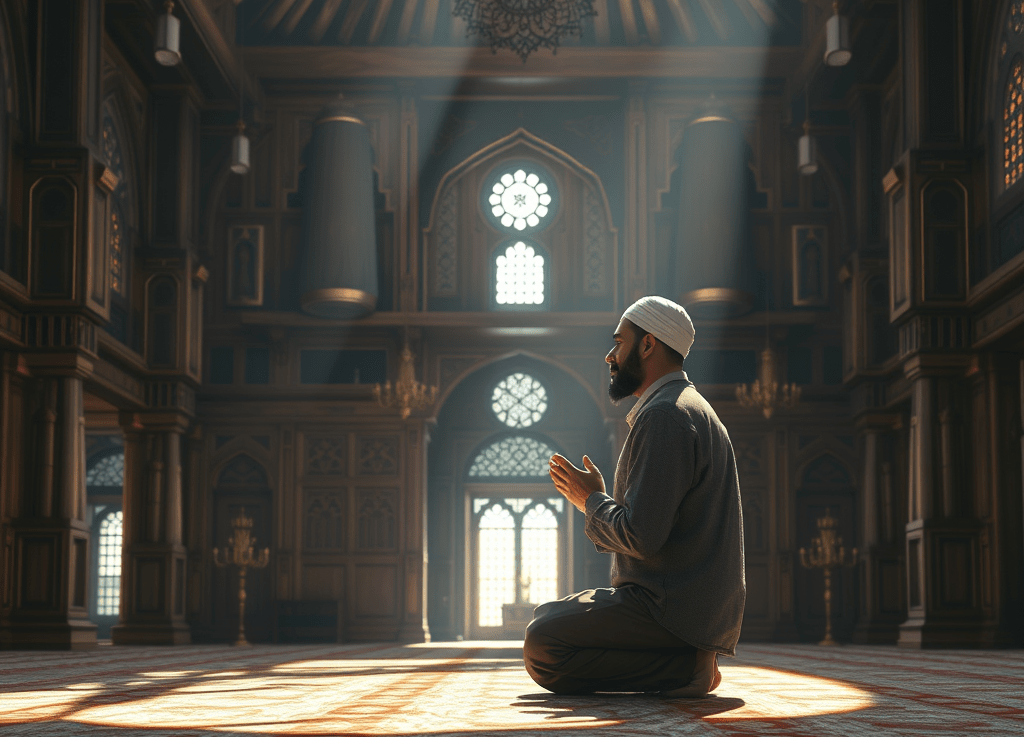
Namaz, or Salah, refers to the Islamic act of worship performed five times a day. It’s considered one of the Five Pillars of Islam and holds immense spiritual significance for Muslims worldwide.
Here are the five daily prayers:
- Fajr – Pre-dawn prayer.
- Dhuhr – Noon prayer.
- Asr – Afternoon prayer.
- Maghrib – Evening prayer.
- Isha – Night prayer.
Each prayer involves a series of actions such as standing, bowing, prostrating, and sitting, accompanied by verses from the Quran. Before praying, Muslims perform Wudu (ablution), a ritual cleansing to ensure physical and spiritual purity.
The difference between salah (صلاة) and salat is primarily one of transliteration and pronunciation.
- Salah is the more common transliteration used in English, especially in general discussions about Islamic practices. It follows a standard transliteration style that aligns with English phonetics.
- Salat is another transliteration, often found in older texts or French-influenced writing. Both words refer to the same concept in Islam: the ritual prayer performed five times a day by Muslims. In Arabic, the word is ṣalāh (صلاة), with the final -h being a tāʾ marbūṭa (ة), which is sometimes pronounced like a t in certain grammatical cases (e.g., when followed by a possessive suffix).
Key Elements:
- Five Daily Prayers:
- Fajr (Dawn): Performed before sunrise.
- Dhuhr (Noon): Performed after the sun passes its zenith.
- Asr (Afternoon): Performed in the late afternoon.
- Maghrib (Sunset): Performed just after sunset.
- Isha (Night): Performed after twilight.
- Qibla:
- Muslims face the Kaaba in Mecca during prayer.
- Raka’ah:
- Each prayer consists of a set number of units called raka’ah, which involve specific postures and recitations.
- Wudu (Ablution):
- A ritual cleansing performed before prayer.
- Recitations:
- Prayers include recitations from the Quran, particularly Surah Al-Fatiha (the opening chapter).
- Physical Movements:
- Salah involves a series of physical movements, including standing, bowing, prostrating, and sitting.
- Spiritual Significance:
- Salah is more than just a physical act; it’s a spiritual practice that fosters humility, discipline, and connection with God.

 Czech Language Lessons & Translations