
Cenotes are captivating natural sinkholes that reveal the Maya underworld and offer stunning scenery. They are an integral part of the Yucatán Peninsula’s unique landscape.
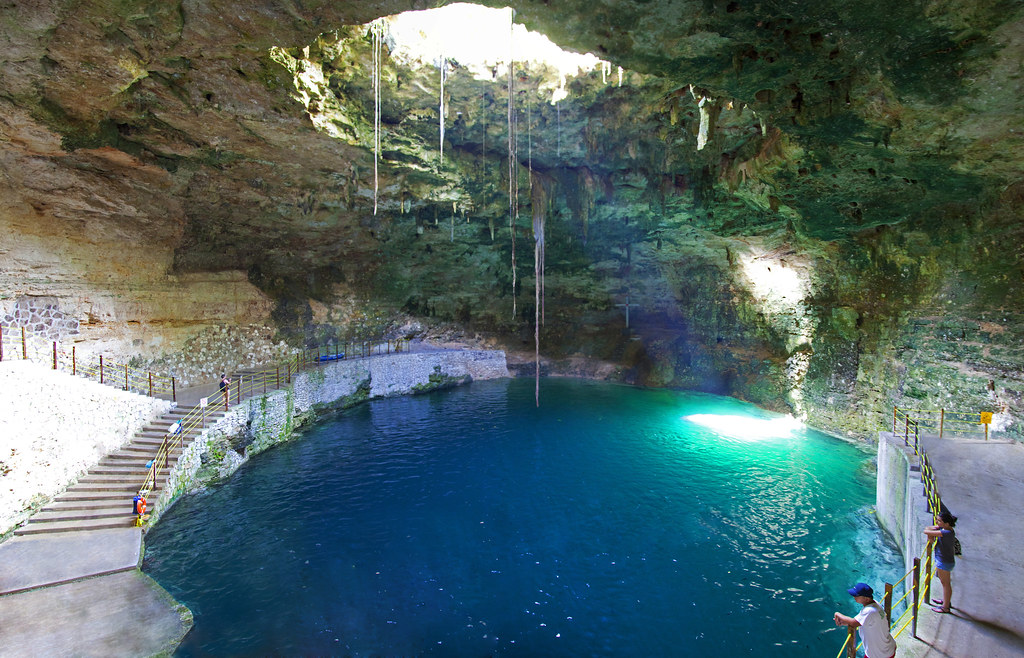
-
- A cenote is a natural pit or sinkhole formed when limestone bedrock collapses, exposing groundwater.
- The term comes from the Yucatec Maya word “tsʼonoʼot,” which refers to any location with accessible groundwater.
- The ancient Maya commonly used cenotes for water supplies and occasionally for sacrificial offerings.
- Types of Cenotes:
- Large Open-Water Cenotes: These are well-known and can measure tens of meters in diameter. Examples include the cenotes at Chichen Itza.
- Smaller Sheltered Cenotes: These may not have surface-exposed water and are often discovered through small holes created by tree roots. Some are accessible through human-enlarged openings.
- Characteristics:
- Cenote water is often crystal clear, as it filters slowly through the ground from rainwater.
- Groundwater flow rates within cenotes can vary, from very slow to as fast as 10 kilometers (6 miles) per day.
- The Yucatan cenotes attract cave divers, who explore extensive flooded cave systems.
- Geological Formation:
- Cenotes result from the dissolution of rock, creating subsurface voids.
- Rock that falls into the water below is gradually removed by further dissolution, leading to structural collapse.
- Some cenotes are linked to active cave systems, while others remain hidden.

 Czech Language Lessons & Translations